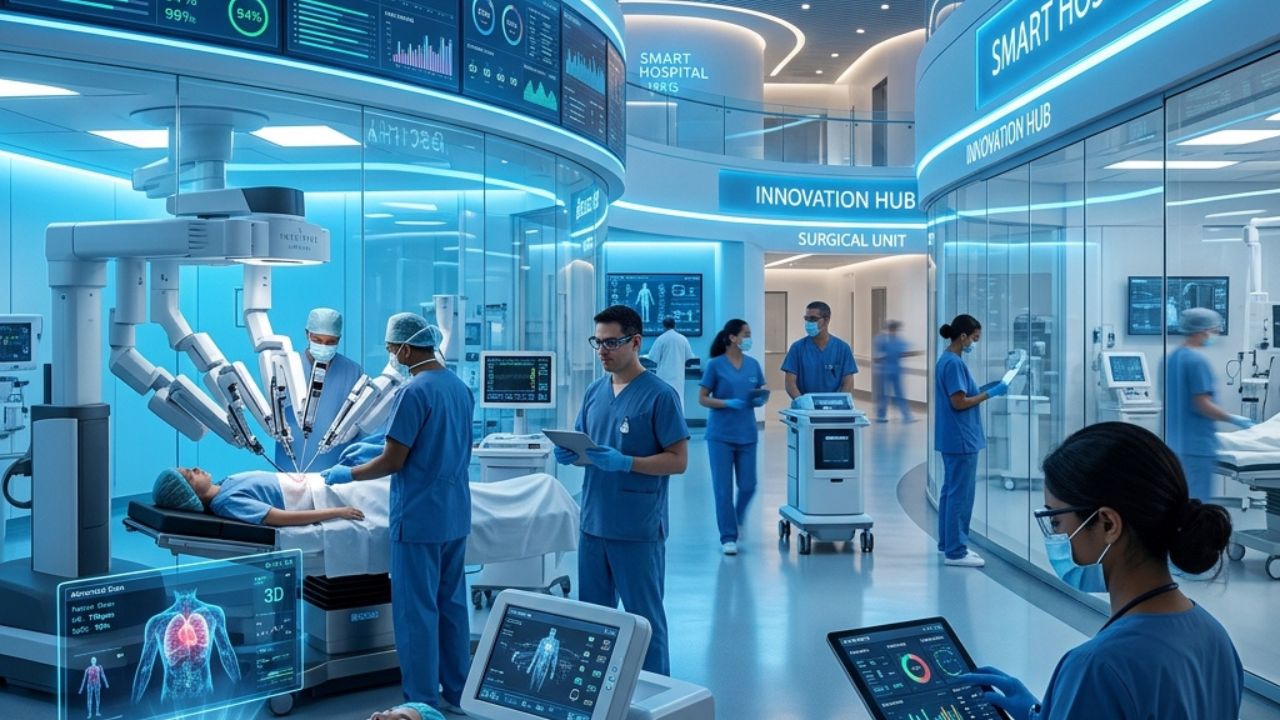
The concept of a hospital is undergoing a massive transformation. For decades, medical centers have relied on manual processes, paper records, and reactive care models. Now, a new standard is emerging across the United States. Smart hospitals are taking shape, driven by the rapid advancement of artificial intelligence and digital healthcare technologies.
Smart hospitals use interconnected devices, advanced computing, and automated systems to improve patient care and streamline administrative tasks. They represent a fundamental shift in how medical professionals interact with patients, manage resources, and diagnose illnesses. By bridging the gap between physical care and digital intelligence, these facilities create a highly efficient, responsive environment.
The convergence of AI and digital healthcare brings unprecedented opportunities. Medical devices can now communicate with each other. Software can analyze thousands of patient records in seconds to predict health outcomes. Smart hospitals are revolutionizing healthcare in the US by reducing human error, lowering operational costs, and ultimately saving lives.
The Current Landscape of US Healthcare
The United States healthcare system faces immense pressure. Medical providers are dealing with rising operational costs that squeeze hospital budgets and increase the financial burden on patients. Staffing shortages heavily impact day-to-day operations. Nurses and doctors are working longer hours, leading to severe burnout and high turnover rates. Furthermore, data silos prevent different departments and external clinics from sharing vital patient information, slowing down the delivery of urgent care.
Hospitals have already started adopting new technologies to address these problems. Electronic Health Records (EHRs) replaced paper charts, making patient histories more accessible. Telehealth platforms saw massive growth recently, allowing doctors to consult with patients remotely. These tools provided a solid foundation for digital healthcare.
However, a significant gap remains between having digital tools and having an intelligent, connected ecosystem. EHRs often require tedious manual data entry. Telehealth solves the distance problem but does not necessarily improve diagnostic accuracy. Smart hospitals aim to fill this gap by integrating these isolated tools into a single, cohesive network that actively assists medical staff rather than just storing their notes.
Pillars of the Smart Hospital Ecosystem
To understand how these modern medical centers operate, we must examine the core technologies powering them. The smart hospital ecosystem relies on four main pillars.
Artificial Intelligence (AI) in Healthcare
Artificial intelligence serves as the brain of a smart hospital. It processes information, learns from patterns, and provides actionable insights to human workers.
Predictive analytics drastically improve patient outcomes. AI algorithms analyze a patient’s vital signs, medical history, and genetic markers to calculate the risk of future events, such as a heart attack or a dangerous infection. Doctors can intervene early, treating conditions before they become life-threatening emergencies.
AI-powered diagnostics are transforming radiology and pathology. Machine learning models scan X-rays, MRIs, and tissue samples with incredible speed. They can spot microscopic anomalies that a human eye might miss, such as early-stage tumors. This accelerates the diagnostic process and ensures patients begin treatment as soon as possible.
In the realm of drug discovery and personalized medicine, AI evaluates massive chemical databases to find potential new medications. It also helps tailor treatments to individual patients based on their specific genetic makeup, ensuring a higher success rate with fewer side effects.
Finally, AI creates vital operational efficiencies. Hospitals use intelligent software to predict patient admission rates, optimize staff schedules, and allocate resources like beds and surgical equipment. This prevents overcrowding and reduces the time patients spend waiting for care.
Internet of Medical Things (IoMT)
The Internet of Medical Things acts as the nervous system of the hospital. It consists of physical devices equipped with sensors and software that collect and transmit medical data over a secure network.
Wearable devices and remote patient monitoring extend the hospital’s reach into the patient’s home. Smartwatches and medical-grade biosensors track heart rates, blood oxygen levels, and sleep patterns. Doctors receive continuous updates on their patients’ health, allowing them to monitor recovery without requiring frequent hospital visits.
Smart sensors inside the hospital building improve safety and efficiency. Bed sensors detect when a patient attempts to get up, alerting nurses immediately to prevent dangerous falls. Occupancy sensors track which rooms are empty and require cleaning, speeding up the turnover rate for new admissions.
Connected medical devices directly impact bedside care. Smart IV pumps automatically adjust medication dosages based on real-time electronic orders. Connected ventilators monitor lung capacity and alert respiratory therapists if a patient’s breathing pattern changes unexpectedly.
Big Data and Analytics
With thousands of connected devices generating information every second, hospitals require robust systems to manage Big Data.
Medical facilities leverage vast datasets to extract meaningful insights. By analyzing trends across thousands of patients, researchers can identify common risk factors for diseases or evaluate the overall effectiveness of a specific treatment protocol. This population-level data drives medical breakthroughs and improves public health policies.
Real-time data processing provides immediate decision support for doctors. When a physician prescribes a new medication, the system cross-references it with the patient’s current drugs and allergies in milliseconds. If it detects a harmful interaction, it blocks the order and suggests a safe alternative.
Data security and privacy concerns remain a massive priority in healthcare. Patient records contain highly sensitive personal information. Smart hospitals invest heavily in advanced cybersecurity measures, including end-to-end encryption and blockchain technology, to protect data from cyberattacks and unauthorized access.
Robotics and Automation
Robotics provide the physical muscle to the smart hospital environment, handling precise surgical tasks and repetitive logistical duties.
Surgical robots assist surgeons during complex procedures. These machines offer enhanced magnification and robotic arms that move with perfect precision, eliminating natural human hand tremors. Minimally invasive robotic surgery results in smaller incisions, less blood loss, and much faster recovery times for patients.
Pharmacy automation revolutionizes how medications are dispensed. Robotic dispensing systems read electronic prescriptions, count pills, package them, and label the bottles accurately. This drastically reduces medication errors and frees up pharmacists to consult with patients and medical staff regarding complex drug therapies.
Embracing the Next Era of Healthcare
The transition to smart hospitals requires significant investment, training, and strategic planning. Medical facilities must upgrade their digital infrastructure and ensure their staff feels comfortable working alongside advanced AI and robotic systems. The challenges are real, but the potential rewards are immense. By fully adopting AI, IoMT, Big Data, and robotics, the US healthcare system can overcome its current limitations. Patients will receive faster, safer, and more accurate care, establishing a new global standard for medical excellence.